Find what is going to waste
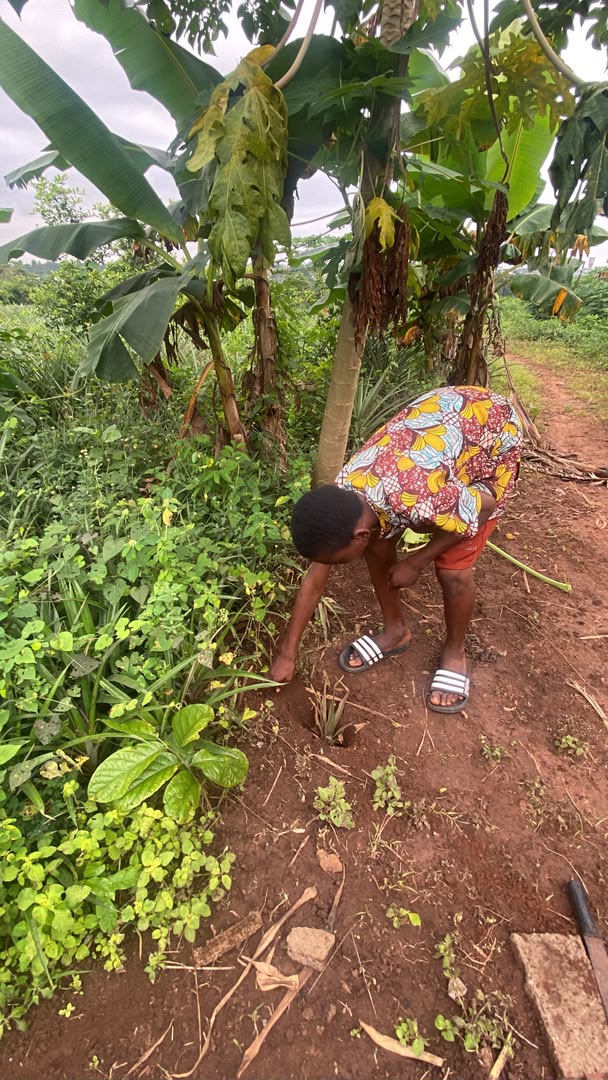
Knowledge, time, land, water, tools, transport, crop waste, empty buildings, skills. Students walk the farm and the community looking for value that is sitting idle.
A free Saturday programme where young people learn to look at an ordinary farm and see the opportunities everyone else walks past, then use technology to do something about them.
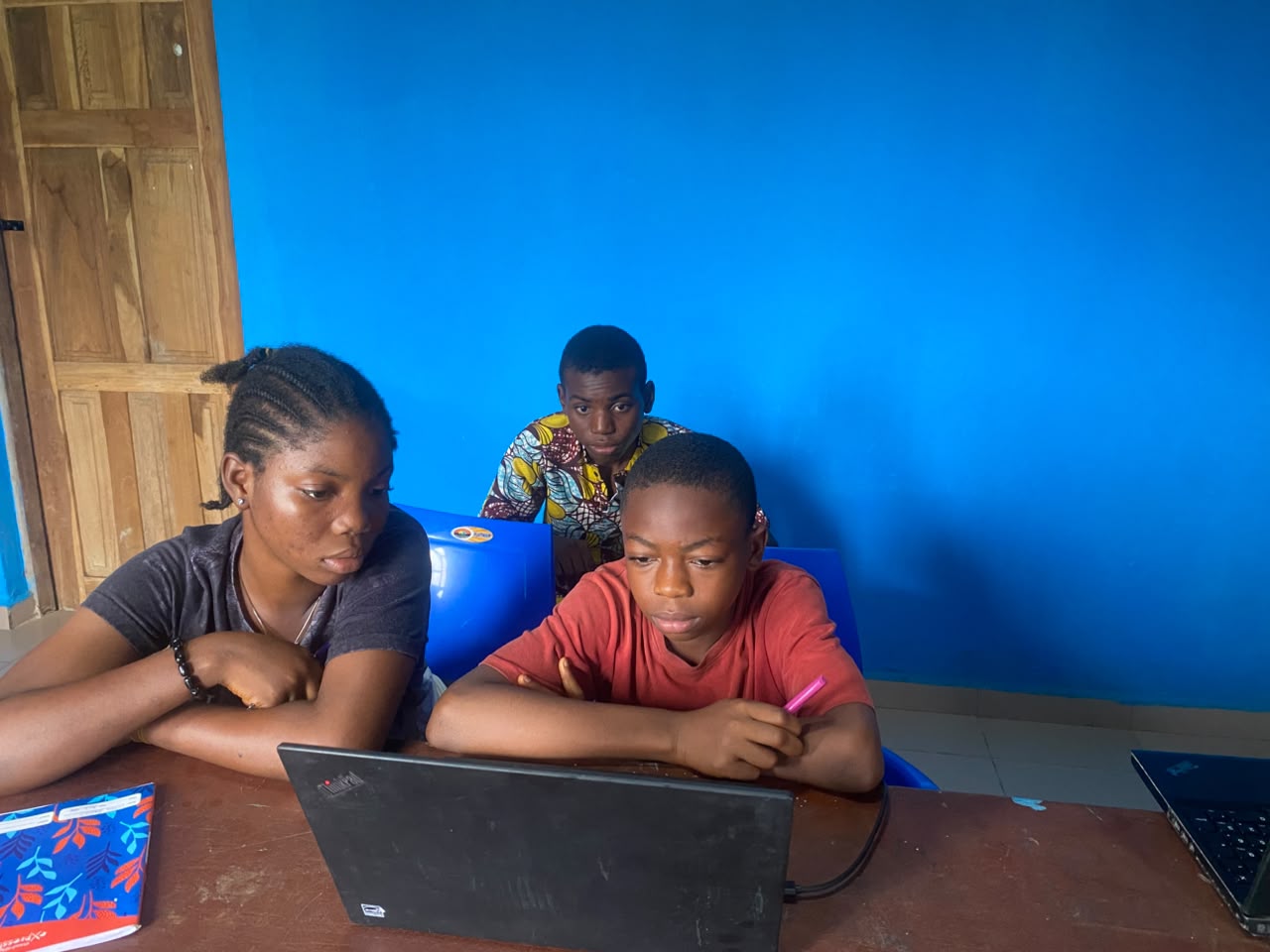
Every Saturday, a small group of young people meet at our farm in Odogbolu. They spend the morning learning how clever ideas actually get made, and the rest of the day trying to make one.
The programme is built on a single idea: most real innovation does not start with someone saying "let's build an app". It starts with someone noticing a resource that is already there and going unused: spare time, idle equipment, local knowledge, wasted crop, an empty building, or a skill nobody is calling on. Technology is what connects that resource to the person who needs it.
So we do not begin by teaching our students to code an idea. We begin by teaching them to find one.
Knowledge, time, land, water, tools, transport, crop waste, empty buildings, skills. Students walk the farm and the community looking for value that is sitting idle.
A resource is only useful if somebody is trying to reach it and cannot. Students have to name a real person with a real problem, not a vague market.
Only now does technology enter, as the bridge between the two. Often the answer is far cheaper and simpler than the obvious one.
Our students learn from real platforms and real campaigns, how they work, and more importantly, why they work.
Volunteer first responders reach an emergency before the ambulance can.
A sighted volunteer lends their eyesight to a blind user over video.
Surplus food from one household becomes dinner in another.
Thousands of tiny observations build one accessibility map.
Five spare minutes of attention becomes scientific research.
Volunteers map vulnerable communities before disaster arrives.
Crop disease diagnosis inside a farmer's phone.
Agricultural advice built for radio and basic phones, not smartphones.
From these, our students have worked on ideas of their own for Nigerian agriculture, including Farm Eyes (photograph a sick crop or animal and reach someone who knows), Farm Map Nigeria (a community-built map of boreholes, tractors, mechanics, vets and agro-input shops) and Farm Share (a local board for the tractor, the spare transport or the workers that would otherwise sit idle tomorrow).
Students are not allowed to solve problems by spending money. They cannot buy new equipment, add a new rule, or hire anybody. They have to find something valuable that is already being wasted around them and put it to work.
It teaches the habit that matters most: discover invisible resources first, build technology second.
Secondary-school age young people in and around Odogbolu who are curious, willing to speak up, and happy to get their hands dirty on a working farm.
No prior coding experience is needed. No laptop is needed, we provide them. What we ask for is attendance, effort, and a willingness to present your own thinking out loud.
If you are local to our farm in Odogbolu and you would like your child to join the Saturday Tech Farm School, send us a message on WhatsApp. Tell us your child's name and age and we will let you know about the next available place.
Message us on WhatsApp Free to attend · Places are limited